Signs You May Need Radiofrequency Ablation (RFA) for Your Thyroid Nodules
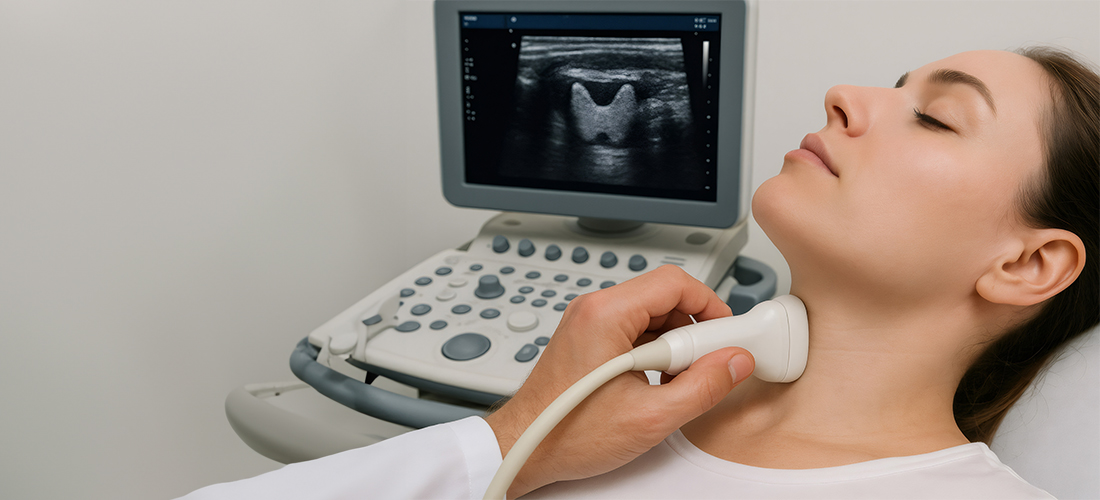
Signs You May Need Radiofrequency Ablation (RFA) for Your Thyroid Nodules
Thyroid nodules are extremely common, especially in adults over the age of 40. Many remain silent for years, cause no discomfort, and are discovered only during routine health checks or imaging for unrelated issues. Most nodules are benign, harmless, and require nothing more than periodic monitoring.
However, not all nodules behave the same way. Some start growing, some begin to press on nearby structures, and others may affect thyroid hormone levels, leading to symptoms that interfere with daily life. When this happens, patients naturally begin exploring treatment options, including minimally invasive therapies such as Radiofrequency Ablation (RFA).
RFA has emerged as a safe, effective, and tissue-preserving technique that treats symptomatic benign thyroid nodules without surgery, without a scar, and with quick recovery. But a common question remains:
How do you know when it’s time to consider RFA?
Read this blog to understand the symptoms that matter, why nodules form, and when minimally invasive treatments such as RFA become the right step forward.
What Are Thyroid Nodules and Why Do They Form?
A thyroid nodule is a growth or lump within the thyroid gland, located at the front of the neck. Nodules can be solid, fluid-filled, or a mixture of both. Their exact cause can vary, but common contributing factors include:
- Normal age-related changes in thyroid tissue
- Iodine deficiency
- Thyroid inflammation (thyroiditis)
- Overgrowth of normal thyroid tissue
- Cysts
- Autoimmune thyroid disease
- Rarely, thyroid cancer
Most nodules are benign. The challenge is determining which nodules are harmless and which may require attention because of symptoms, growth, or hormonal abnormalities.
When Does a Minimally Invasive Treatment Become the Right Choice?
A minimally invasive treatment becomes appropriate when a thyroid nodule begins to interfere with your comfort, appearance, health, or confidence, or when continued observation is no longer practical. RFA is ideal when the nodule is benign but problematic either due to symptoms, growth, or cosmetic concerns.
If you find that your nodule is affecting your daily routine, your sleep, your swallowing, or causing anxiety, it may be time to consider RFA.
What Is Radiofrequency Ablation (RFA) and How Does It Work?
Radiofrequency Ablation is a minimally invasive, ultrasound-guided treatment that uses controlled heat energy to shrink thyroid nodules. A fine needle electrode is inserted into the nodule under local anesthesia, and radiofrequency waves gently break down the targeted tissue. Over the next few weeks to months, the treated nodule shrinks significantly often by 60–90%.
Key advantages of Radiofrequency Ablation (RFA):
- No surgical incision
- No stitches
- Performed under local anesthesia
- Thyroid gland is preserved
- Same-day discharge and rapid recovery
- Minimal risk of affecting thyroid hormone levels
For many patients, RFA has become a preferred nonsurgical option for symptomatic benign nodules.
Is My Thyroid Nodule Causing Symptoms That Make Me a Candidate for RFA?
Symptoms are one of the strongest indicators that RFA may be right for you. Even benign nodules can become troublesome when they grow or press on nearby structures.
Although many nodules remain silent, certain symptoms indicate that the nodule is affecting nearby structures or causing changes in thyroid function. These symptoms do not automatically mean that treatment is required, but they warrant an evaluation to determine the underlying cause.
Given below are the most important signs to pay attention to.
Is Your Nodule Causing Neck Pain, Pressure, Tightness, or Discomfort?
As a thyroid nodule increases in size, it can compress nearby structures in the neck. One of the earliest signs patients notice is a visible lump on the lower front of the neck. This may be:
- A soft, rounded bulge
- A firm or well-defined swelling
- An asymmetry of the neck contour
Changes in appearance often prompt people to seek medical advice. Visible enlargement can indicate that the nodule has reached a size where it may begin to cause pressure or mechanical symptoms.
RFA effectively reduces the size of such nodules by inducing local shrinkage over time. In many cases, >50% volume reduction is seen within months, helping alleviate pressure without removing thyroid tissue.
Are You Having Difficulty Swallowing (Dysphagia)?
The thyroid lies close to the oesophagus (food pipe). As nodules enlarge, especially those that grow toward the side or back of the gland, they may press on the oesophagus. A nodule positioned near the esophagus can interfere with the smooth passage of food. This can cause:
- A feeling that food is “getting stuck”
- Difficulty swallowing solid foods
- Need to drink water to help food pass
- A vague discomfort when swallowing
Patients often describe it as a “foreign body sensation” rather than true pain. Dysphagia is one of the clearest indicators that a nodule is exerting significant pressure internally. As it shrinks only the problematic nodule, RFA helps relieve swallowing difficulty while preserving the remainder of the thyroid.
Do You Feel a Lump in Your Throat When Lying Down?
When you lie flat, gravity shifts the position of the nodule, making its presence more noticeable. Some people experience a feeling of tightness, pressure, or choking especially when lying down. This can occur even with moderate-sized nodules depending on their positioning. Patients frequently report:
- A choking or fullness sensation at night
- The need to sleep on an elevated pillow
- Awareness of a lump pressing backward
These sensations do not usually cause breathing obstruction, but they can affect comfort and sleep quality. As the nodule shrinks post-RFA, these symptoms commonly improve often without the need for hospital admission or general anesthesia.
Are You Experiencing Voice Fatigue or Subtle Voice Changes?
Although uncommon, a nodule positioned close to the recurrent laryngeal nerve (which controls vocal cords) may cause hoarseness or voice fatigue. Voice changes can also occur due to irritation or pressure on surrounding tissues.
Typical symptoms include:
- Hoarseness
- Crackling or unstable voice
- Frequent throat clearing
- Reduced ability to project voice
Because RFA is performed under ultrasound guidance and targets only the nodule, it minimizes the risk to surrounding structures, including the recurrent laryngeal (vocal) nerve.
Is Your Thyroid Nodule Causing Irregular Hormonal Symptoms?
Not all nodules are hormonally inactive. Some begin producing excess thyroid hormones, leading to hyperthyroidism. These are known as functional or autonomous nodules.
Symptoms may include:
- Palpitations or rapid heartbeat
- Anxiety, irritability, or nervousness
- Tremors of hands
- Heat intolerance
- Weight loss despite normal diet
- Fatigue or muscle weakness
- Difficulty sleeping
These symptoms can mimic stress-related issues or other medical conditions, so proper testing is important. RFA reduces the active tissue that is over-producing hormones, often normalizing thyroid levels without the need for surgical removal.
Has Your Nodule Become Visible and Affecting Cosmetic Appearance?
While cosmetic concerns alone may not require immediate treatment, they are legitimate reasons to seek evaluation and discuss options. Large nodules can cause:
- Asymmetry in the neck
- A protruding bulge that moves when swallowing
- Self-consciousness during social interactions or photography
RFA leaves no surgical scar, a key advantage for patients who wish to correct the contour of the neck without an incision.
Has Your Nodule Continued to Grow Over Time?
Progressive growth, even in a benign nodule, increases the likelihood of future symptoms. Warning signs include:
- Noticeable enlargement within a year
- A documented increase in nodule volume on ultrasound
- A need for more frequent medical check-ups
Growth alone is not dangerous but it can predict future compression or cosmetic issues. RFA is frequently recommended for benign nodules that show persistent enlargement because early intervention can prevent the development of more severe symptoms later.
Even if the nodule is non-cancerous, persistent symptoms mean your daily quality of life is being affected. In such cases, RFA offers fast, effective symptomatic relief without surgery.
When Is Radiofrequency Ablation Usually Recommended?
Clinicians may suggest RFA when:
- A thyroid nodule is benign (confirmed through FNAC/biopsy).
- It causes mechanical, cosmetic, or hormonal symptoms.
- The nodule shows documented growth over multiple evaluations.
- Surgery is not preferred due to preservation concerns or patient choice.
- A person wishes to avoid scars, general anesthesia, or long recovery.
RFA is considered a tissue-preserving, minimally invasive option that treats the problem by shrinking the nodule rather than removing the thyroid.
How Does RFA Compare with Other Thyroid Nodule Treatments?
| Aspect | RFA (Radiofrequency Ablation) | Surgery (Hemithyroidectomy / Total Thyroidectomy) | Observation / Watchful Waiting | Ethanol Ablation (PEI) |
|---|---|---|---|---|
| Best For | Symptomatic benign solid or mixed nodules; functioning nodules | Very large nodules, suspicious nodules, confirmed cancer | Small, asymptomatic benign nodules | Predominantly cystic nodules |
| Invasiveness | Minimally invasive (needle-based, no incision) | Invasive (open surgical procedure) | No procedure | Minimally invasive (needle-based) |
| Anesthesia | Local anesthesia | General anesthesia | None | Local anesthesia |
| Hospital Stay | Usually same-day discharge | 1–2 days (varies) | No stay | Same-day |
| Scar | No visible scar | Visible neck incision | None | No visible scar |
| Recovery Time | 1–2 days for routine activity | 1–3 weeks for full recovery | Not applicable | 1–2 days |
| Effect on Thyroid Function | Typically preserved; low risk of hypothyroidism | Possible need for lifelong thyroid hormone replacement (especially after total thyroidectomy) | No effect | Thyroid function preserved |
| Effectiveness for Solid Nodules | High (significant long-term shrinkage) | High (complete removal) | No reduction; size may increase | Limited effectiveness |
| Effectiveness for Cystic Nodules | Good, but may require additional sessions | High | No reduction | Very high for cystic nodules |
| Risk Profile | Low complication rate; ultrasound-guided precision | Higher risk (nerve injury, bleeding, anesthesia risks) | No procedure-related risks | Low risk; may need repeat sessions |
| Downtime / Return to Work | Usually next day | 1–3 weeks | Immediate | 1–2 days |
| Impact on Daily Life | Minimal | Moderate to significant during recovery | None | Minimal |
| Suitability for Functioning (“Hot”) Nodules | Effective (reduces hormone production) | Effective | Not suitable | Limited usefulness |
Why Choose RIVEA for Thyroid Nodule Evaluation and RFA?
RIVEA Vascular Institute provides comprehensive, evidence-based care for thyroid nodules and minimally invasive treatments. We combine advanced imaging, precision techniques, and a multidisciplinary approach to ensure accurate diagnosis and appropriate treatment. Patients can expect:
- Specialists trained in advanced thyroid RFA techniques
- Ultrasound-guided precision for safety and effectiveness
- Gland-preserving, minimally invasive treatment philosophy
- Clear communication and counselling at every step
- Structured follow-up and long-term monitoring
The Interventional Radiology department at RIVEA is led by Dr. Arjun Reddy, one of South India’s leading Interventional Radiologists, widely recognized for his expertise in advanced image-guided therapies. His experience in thyroid RFA and minimally invasive procedures ensures patients receive modern, safe, and effective care tailored to their needs.
Whether you are experiencing symptoms, seeking alternatives to surgery, or simply need clarity on your thyroid nodule, RIVEA provides the guidance, evaluation, and treatment pathway to help you make the most informed choice.
Click here to learn more about:
Radiofrequency Ablation (RFA)
For any inquiries, post your query here:
Ask Rivea
Contact us today to explore your options.
Call Now